Thursday, 6 May 2010

Worlds Biggest Vegetables


Sweet Potato


Location: Lebanon

Weight: 11.3 kg

Marrow


Location: United Kingdom

Weight: 65 kg

Cabbage


Location: Alaska

Weight: 34.4kg

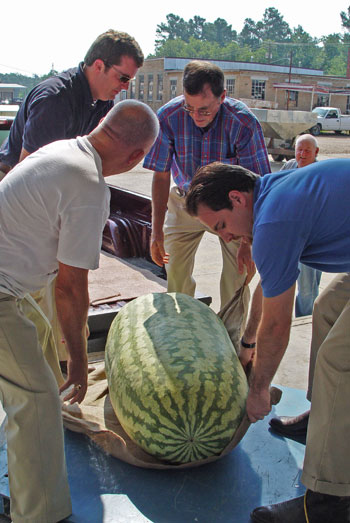
Watermelon


Location: America

Weight: 122kg

Carrot


Location: Alaska

Weight: 8.61kg

Pumpkin


Location: America

Weight: 1689lb

Potato


No statistics available

Cauliflower


Location: Alaska

Weight: 14.1kg

Wow these veggies are quite something else - I wonder if they have to insure their pride and joys? I reckon you'd need some special farm insurance for that!

World's Largest Farm Animals


Largest Cow


Chilli the giant bullock stands at 6ft 6ins and weighs well over a ton

Largest Sheep


Largest Pig

Big Norm - 

1,600 lbs and 8 feet long

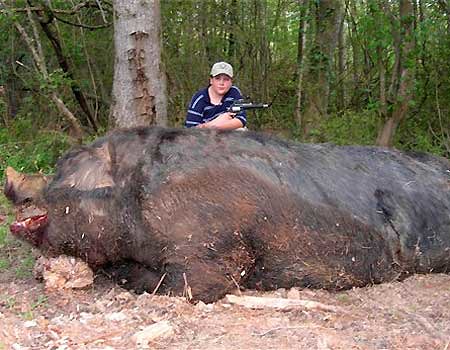
Hogzilla - 


1,060 lb and 9.4 feet long

Largest Domestic Cat


Largest Rabbit


Darius the rabbit measures 4ft 3 inches and weighs 3st 7lbs!  

Largest Horse


Radar is 6ft 7½ inches tall and weighs nearly 2,400lb – he eats 18lb of grain a day and drinks 18 gallons of water

Largest Dog


George the Giant is 7ft 3 inches from nose to tail plus he wieghs a whopping 245lbs

I wonder if you have to get special farm insurance for these larger than life characters?

Friday, 19 March 2010

Amazing Tractor Accidents - When Farming Goes Wrong!

A collection of amazing tractor accident pictures from around the world. You'd be amazed at the situations that some crazy farmers get themselves into with their tractors!


I wonder if these tractor insurance claims would be covered under farmers insurance or do you need separate tracotr insurance?

Thursday, 18 March 2010

Branching Out - A Checklist For Farm Diversification

Having endured a sustained period of economic instability, many modern businesses - farms included - have been forced to reassess their position going forward. While times have been tough, it's nothing that farmers haven't been through before. Major incidents from BSE to foot and mouth mean that farm owners have been dealt crushing blows before. A lot of those who came out the other side did so because they managed to identify ways to supplement their traditional income by branching out into new areas.

Diversification has helped many a farm battle through troubled times and it's become an increasingly valid option for those owners who wish to bring in extra revenue. But it's not an easy step to take; those who do have such plans need to ensure they have planned meticulously and covered all the bases. Simply deciding to diversify is not enough - finding the right gap in the market and then executing a well-prepared strategy is essential. With that in mind, here are a few points to consider:

Play to your strengths
If your farm has buildings that are currently going unused, think about how you could use them efficiently to branch out. Successful diversification often hinges on putting existing assets to good use - it makes good economic sense to go down that route. Take an inventory of your unused resources as one of the first stages of brainstorming initial ideas.

Fill that gap
Get out there, do your research and find out what the local area is crying out for - if you can find a way to meet that demand then you're halfway there. By canvassing locals for products and services they feel are lacking in your area you'll be generating the best possible ideas for diversification.

Stay engaged
By keeping new business ideas in your sphere of personal interest, you'll ensure that you won't get bored with the venture six months down the line. Try and find a viable business opportunity covering a subject you have a genuine passion about. It doesn't matter what it is; if you're fully committed to making it work with a long-term strategy and a burning desire to succeed then the chances are you're off to a great start.

Get inspired
Do some research in to what has made for successful farm diversification in the past. Read up on case studies and draw some inspiration. That's not to say that you should copy a business idea wholesale, of course; what works elsewhere won't automatically be right for you.

Check your cover
Farmers insurance is incredibly important, so if you're looking to change the direction of your business be sure to check that your current policy is compatible with your plans. If it's not, shop around for insurance that suits your needs going forward.

Take these points into account and there's no reason why a well-planned diversification plan can't pay dividends. Finding a potential area of business that excites you personally and looks likely to fill a much needed gap in the market is the key to a prosperous future.

Every farm is unique - Cornish Mutual in South West England help develop farmers insurance that meet farmers needs, including public liability, employers' liability, property insurance, livestock and farm insurance and personal accident cover.

Tuesday, 5 January 2010

How UK Farmers Are Diversifying to Boost Their Incomes

While the recent global economic crisis has had a profound effect on many UK industries, livestock farmers have been dealing with major economic set-backs throughout history, with instances such as the BSE epidemic in the mid-80s - and outbreaks of diseases such as foot and mouth, TB and swine fever - being most memorable for those of younger generations.

Consequently, over the last two decades farmers who had previously relied on livestock as a major part of their income have diversified in order to ensure more financial stability for themselves and their families - and this diversification trend has led to a number of intriguing developments and projects on UK farms. At an April 2009 Agrical conference paying host to many industry experts, it was estimated that 50 percent of UK farms have now diversified.

Perhaps unsurprisingly, a number of farmers located in regions popular with tourists are finding considerable success with offering Bed & Breakfast and holiday home facilities. This is a trend that is particularly popular with those who have buildings free for conversion or sufficient space to develop on unused land - and these are often the prevailing factors which make rural farms ideal locations to cater for tourists.

The Henly family at Bucklawren Farm in Looe, Cornwall are a prime example of making new use of both existing buildings and the land that surrounds them. They have converted barns and stables into five self-catering cottages within their farm grounds just a mile from the beach. In addition the farm now also boasts an acclaimed restaurant which prides itself on locally sourced produce.

Despite the popularity of appealing to couples and families, other farmers in the South West are offering more niche facilities to visitors in the area. Woodland Valley in Ladock is owned by Chris and Janet Jones who, after the Eden Project opened in 2001, decided to open residential facilities for visiting school parties.

This has since developed into a study centre for those with an interest in farming, sustainability and ecology - a more economical use for their own stone buildings which 'were no longer suitable for modern farming.' Much like the changes at Bucklawren, the need to diversify has had more than an economical effect on the workings of the farm itself - and has even stimulated its conversion to being fully organic.

Despite the positive economic outcomes of diversification, this increasing trend does bring new considerations such as public safety and holiday home insurance to the fore - at the same time as maintaining a working farm. The number of farmers looking to follow the footsteps of Bucklawren and Woodland Valley Farm by making the most of their land and buildings in a 21st Century context is set to carry on growing - with farms in other parts of the country allowing the use of their land for music festivals and sporting events also.

Farm diversification has arrived and is here to stay.

Cornish Mutual offer tailored farmers insurance, buy to let property insurance and holiday home insurance for property owners in the residential and holiday lettings markets in South West England.

Thursday, 28 May 2009

Advice for rural community at top shows

Free help and advice as well as tea and Cornish pasties will be on offer to the South West’s rural community this year, as regional insurance firm Cornish Mutual hits the road for its annual tour of the top agricultural shows.

Over the next five months the company, which has Members in Devon, Cornwall, Somerset and Dorset, will be attending many of the region’s major events with a team of dedicated Insurance Inspectors. They will be available to give first-hand guidance on key issues affecting people living and working in the South West countryside.

Cornish Mutual will spend a total of 26 days at 17 shows including the Royal Cornwall, North Devon, Bath and West and Stithians Show, meeting with new and existing Members (see full list of shows below). The team recently spent three days at the Devon County Show in Exeter. This year, the company also unveils its new-look trailer and is providing insurance cover for an increased number of the shows.

Chris Ridgers, Business Development Manager for Cornish Mutual, said: “As always we’re delighted to be attending major agricultural shows across the region. As part of our involvement in the rural community and commitment to being accessible to our Members, having a presence at these shows is vital.

“A number of rural events last year had difficulty securing special event insurance at reasonable cost so we have increased the number of agricultural shows in the South West we insure to assist them in maintaining their annual activity. We like to make sure organisers have the insurance in place which best meets their needs. It is really important that they consider all the risks including personal accident cover for show organising committee members, paid employees and volunteers.

“We’re confident that our new look trailer, which appropriately displays a bright red tractor and chicken, will be hard to miss and at every event we’ll be welcoming Members in for a pasty and cup of tea.”

Chris concluded: “It’s great to be able to meet with our existing Members at these events and also offer advice to anyone interested in finding out more about Cornish Mutual. Our Inspectors are on hand to discuss all aspects of personal, business, home and farm insurance cover.”

Cornish Mutual has been providing farm insurance and holiday home insurance cover to the rural community across the South West for over 100 years. For more information visit www.cornishmutual.co.uk.

Warning over insurance cut-backs

Businesses and homeowners in the South West are being warned against cutting back on insurance in a bid to save money or risk being left underinsured should the worst happen.

“Some savings could prove to be far more costly in the long run,” says Chris Ridgers from regional insurance firm Cornish Mutual, “If you cut back on your insurance policy, when it comes to the crunch and you need to make a claim, you could run into trouble and find you’re underinsured or worse still, end up in front of an industrial tribunal.”

Some business and domestic insurance policies have legal requirements attached to them – for example, legal liability for damage to the property of others or injury to them, where compensation awards and legal fees run into hundreds of thousands of pounds – reducing cover here can be unwise. In the case of employers’ liability and motor third party insurances, there is compulsory insurance legislation to be taken into account.

Chris, Business Development Manager with the company which has offices in Exeter and Truro, adds: “The best advice is to check your cover and policy details carefully, get a second opinion if necessary and make sure you look at all your options. The important thing is not to leave crucial cover to lapse and make sure you have everything you need but are not underinsured – check the level of insurance purchased.”

This comes as homeowners are also being urged not to forgo home and contents insurance, especially holiday home insurance in the south west following recent Government figures showing a four per cent rise in home burglaries during the last quarter of 2008.

Nick Starling, Director of General Insurance and Health at the Association of British Insurers, comments: “Many families will be looking to trim their budgets as the recession bites, but cutting back on home insurance is a false economy. Last year, insurers paid over 6,000 claims, some £7 million, every week, to burglary victims. Without insurance, becoming another crime statistic could plunge you deeper into financial trouble, from which it may take years to recover”.

Companies could legitimately save on some insurance costs by increasing their voluntary excesses for any loss or damage, reducing cover on low-value vehicles to third party, fire and theft, getting rid of flood cover where there is no likelihood of flooding and reviewing sums insured to reflect the basis of insurance, e.g. do they need to be replaced as new or current value figures and reviewing anticipated future income and margins to reassess loss of income protection.

Chris Ridgers adds: “Make sure your insurance provider is aware of your efforts in investing in health and safety or preventing accidents and losses – this could help reduce your premiums. Ask yourself what risks you are prepared to take and what do you want to transfer to an insurer. The overriding message is to find the best way of saving money without putting the future of your business on the line.”